
Uluwatu Tips: A Local’s Guide to the Bukit Peninsula
From the team of La Terrazza Uluwatu
Uluwatu is not one place but a whole peninsula of them. The Bukit, the limestone tableland that hangs off Bali’s southern tip, is drier, wilder, and more vertical than the island most people picture. Its beaches sit at the bottom of cliffs, its temple clings to a 70 metre drop, and its roads wind between the two. What follows is what we tell friends when they ask how to spend their days here: honest, current, and specific. We’ve left out where to eat (you already know where to find us) and focused on everything else.
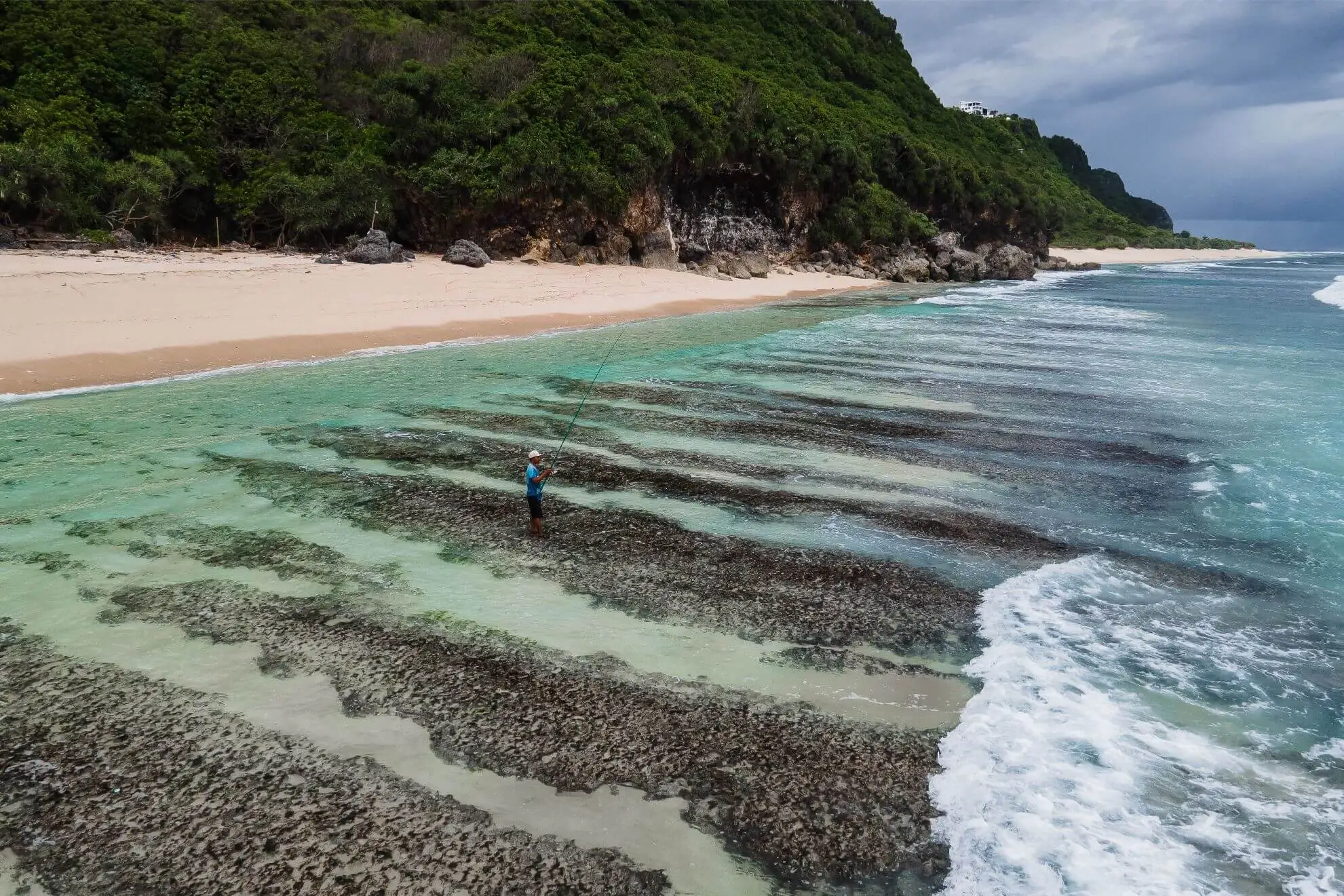
The beaches
The defining fact about Bukit beaches is that almost all of them are reached by descending: stairs cut into rock, cave passages, or steep switchback lanes. Wear sandals you can walk in, bring cash for small entrance and parking fees, and check the tide before you commit to the climb down.
1. Padang Padang (Pantai Labuan Sait)
This is the postcard: a small crescent of white sand reached through a cleft in the rock and down a short flight of stairs, made famous by Eat Pray Love. The cove is sheltered and calm enough to swim at the right tide, which is exactly why it fills up. Entrance is around IDR 15,000, and monkeys work the entrance. Come early or accept the crowds.
2. Bingin
Bingin deserves a frank note. On 21 July 2025 the Bali Provincial Government, led by Governor I Wayan Koster and Badung Regent I Wayan Adi Arnawa, with more than 500 personnel, demolished 48 cliffside structures, the warungs, homestays and bars that had defined Bingin for decades, on the grounds they sat on state land without permits.
As of mid 2026 the beach itself is still open and surfers still use it, but the cliffside is an active demolition and clearing site with debris (which has tumbled onto the sand, especially after heavy rain), rough access, and almost no facilities beyond a couple of drink carts. The redevelopment, a three metre wide cliffside staircase, public toilets and a water network, on an IDR 20 billion budget overseen by the Badung Regency government, was still in the design and clearing stage in mid 2026, with physical construction and a second phase running into 2027 and beyond. Go if you’re curious and sure footed, but don’t expect the Bingin of the guidebooks. It isn’t there right now.
3. Balangan
Balangan is the long one: a 550 metre ribbon of pale sand under a tall cliff, with warungs on the southern end and space to breathe. It’s a wonderful sunset beach and one of the more relaxed places to watch surfers. One caveat for context: officials have identified 23 Balangan buildings as violating spatial planning and state land rules (per Bali Satpol PP chief Dewa Nyoman Rai Dharmadi), placing it under the same scrutiny that reshaped Bingin. As of mid 2026, though, no demolition has been carried out and the beach is operating normally.
4. Dreamland (New Kuta Beach)
Dreamland is the easy one: a wide, open, west facing sweep of sand with minimal stairs and a proper parking area (parking around IDR 5,000 to 15,000 depending on vehicle). It’s the most swimmable of the surf beaches when the swell is small, though the shore break bites on bigger days. Walk north from the crowded entrance and it empties out fast.
5. Suluban / Blue Point
Suluban is the theatrical one. You descend around a hundred steps past cliff cafés, then duck through a low sea cave to emerge on the sand. The name comes from the Balinese mesulub, meaning to pass under. It is a low tide only beach: at high tide the passage floods and it’s genuinely dangerous. Go in the morning or early afternoon at low tide. This is a place to watch surfers and photograph the cave, not to swim.
6. Thomas Beach
Thomas Beach, tucked between Padang Padang and Bingin, is the quieter sheltered cousin: a steep stair down to a calm, swimmable stretch that sees a fraction of Padang Padang’s crowd, and, unlike its neighbours, faces no enforcement disruption.
7. Nyang Nyang (and Nunggalan)
Nyang Nyang and Nunggalan are the wild ones: long, empty, cliff backed beaches reached by a steep switchback lane (scooter) or a long stair descent of several hundred steps. Expect a small access contribution plus parking, around IDR 5,000 to 10,000 in total. Beautiful for walking and photos at low tide, exposed and rip prone for swimming, and pitch dark after sunset, so carry a light if you stay late. A rusting shipwreck on the Nunggalan end is the famous photo.
8. Melasti (Ungasan)
Melasti is the drive in glamour beach: a paved road cut dramatically through limestone brings you almost to the sand, so there’s no punishing climb. White sand, turquoise water, an entrance fee of roughly IDR 10,000 to 20,000, and beach clubs at one end. Good for a full, easy day.
9. Pandawa
Pandawa is the family beach: sheltered, swimmable, with the six carved Mahabharata statues (the five Pandawa brothers and their mother, Kunti) set into the cliff wall at the entrance, an entrance fee of around IDR 15,000 to 25,000 for foreign visitors, loungers, and calm water marked by safety flags. Kayaks for hire.
10. Green Bowl
Green Bowl rewards effort: roughly 300 steep concrete steps down to a small white sand beach with limestone caves at its base, best at low tide. Entrance and parking together run only a few thousand rupiah, around IDR 5,000 to 10,000. Macaques patrol the stairs. Not for anyone unsure on steps.
11. Gunung Payung
Gunung Payung, near the peninsula’s southern tip, is the serene one: reached via a tunnel and an old amphitheatre, then a stair descent of around 280 steps (or a paid shuttle from the car park). Entrance is in the same modest range, around IDR 10,000. Caves for shade, calm water at mid tide, few crowds.
12. Karma Beach
Karma Beach, below Karma Kandara, is a private white sand cove reached by an inclinator down the cliff, accessible as a paying beach club guest. Clean, calm and good for swimming.
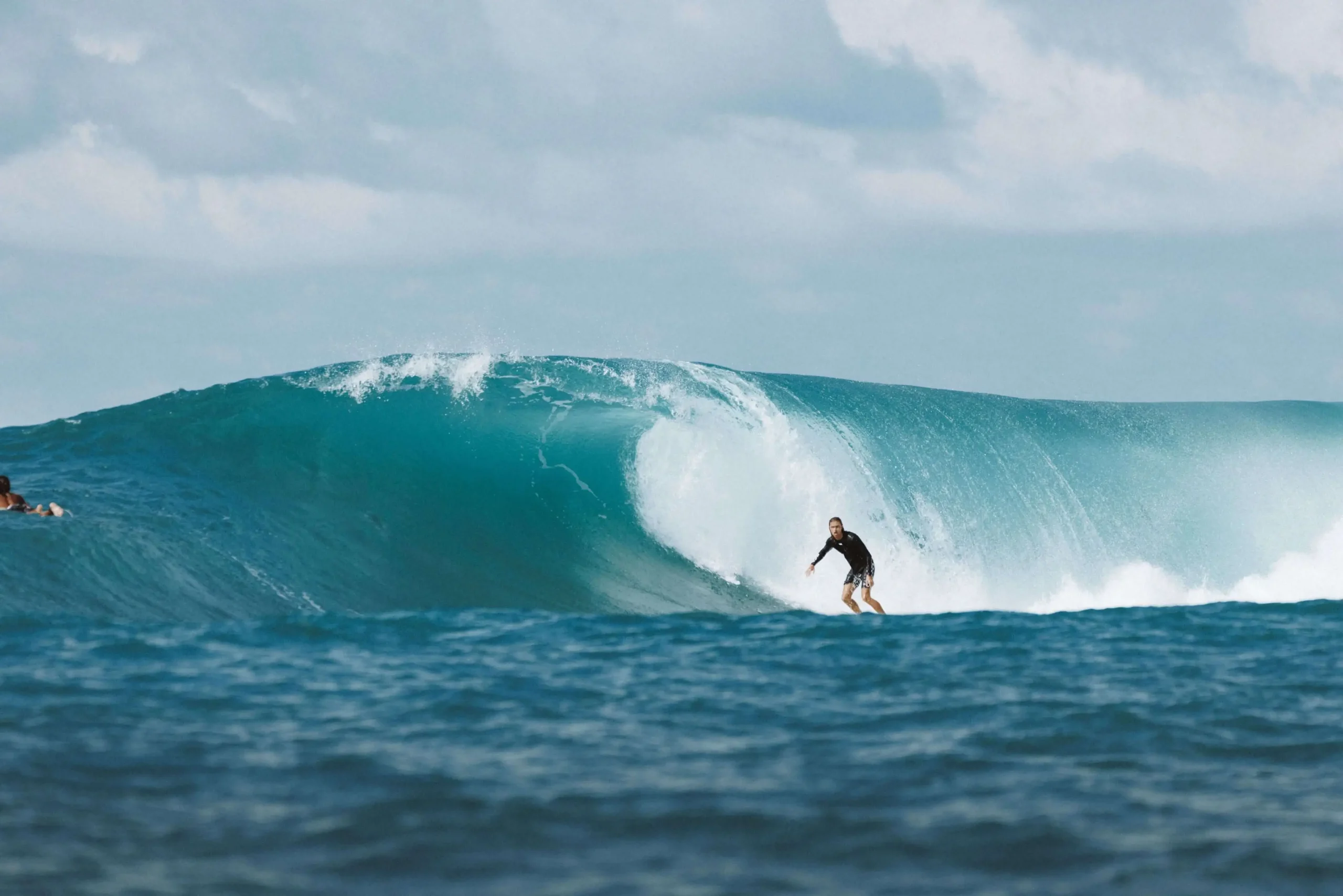
Surf in Uluwatu
The Bukit is one of the great surf coasts on earth, and the reason is geography: the peninsula juts straight into the Indian Ocean swell window, with a deep offshore trench delivering Southern Ocean groundswell onto its reefs with little energy lost. The season is the dry season, roughly April/May to October, when offshore southeast trade winds groom the west facing reefs. This is also when it’s busiest and most competitive.
One honest caveat: many of the Bukit’s famous waves break over shallow reef, and at low tide on a solid swell they are expert territory. But it all depends on tide and conditions. At high tide on smaller days, several of these same breaks become genuinely friendly, and there are proper beginner options too: Balangan on small swells at high tide, Baby Padang next to Padang Padang, and the sand bottom peaks at Dreamland. A local surf school will read the day for you far better than any guide can.
Uluwatu itself is the icon, a series of sections (The Peak, Racetrack, Outside Corner, Temples, The Bombie) that turn on at different tides and sizes, so something is almost always working. You paddle out through the cave at the base of the cliff. It’s an advanced wave; intermediates can find joy on small days at the right tide, but the takeoff is small and the pecking order real. On the biggest swells the outer reefs become a genuine big wave venue.
Padang Padang, the Balinese Pipeline, is a heavy, hollow left hand barrel for experts, best on a solid swell at higher tide. Right beside it, Baby Padang is the area’s genuine beginner option.
Impossibles, between Padang and Bingin, is a fast, sectiony wall for confident intermediates and up. Bingin is a short, mechanical, picture perfect barrel over very shallow reef, intermediate to advanced, with timing everything. Balangan is a long, fast left that spreads the crowd out; intermediate on medium days, and a genuinely good beginner wave on the small stuff at high tide. Dreamland is the forgiving one, the only sand bottom break in the area, with a soft section suitable for improvers and a punchy A frame for the experienced. Nyang Nyang is a reliable but hard to reach wave for solid intermediates and up.
As a general rule here, the higher the tide the mellower and more forgiving the wave; low tide exposes the sharpest, shallowest reef and demands experience. Surf schools, board rental and repair are abundant across Pecatu, Bingin and Padang Padang, from first timer lessons to advanced barrel coaching, and are easy to arrange the day before through most schools and homestays.
Uluwatu Temple (Pura Luhur Uluwatu)
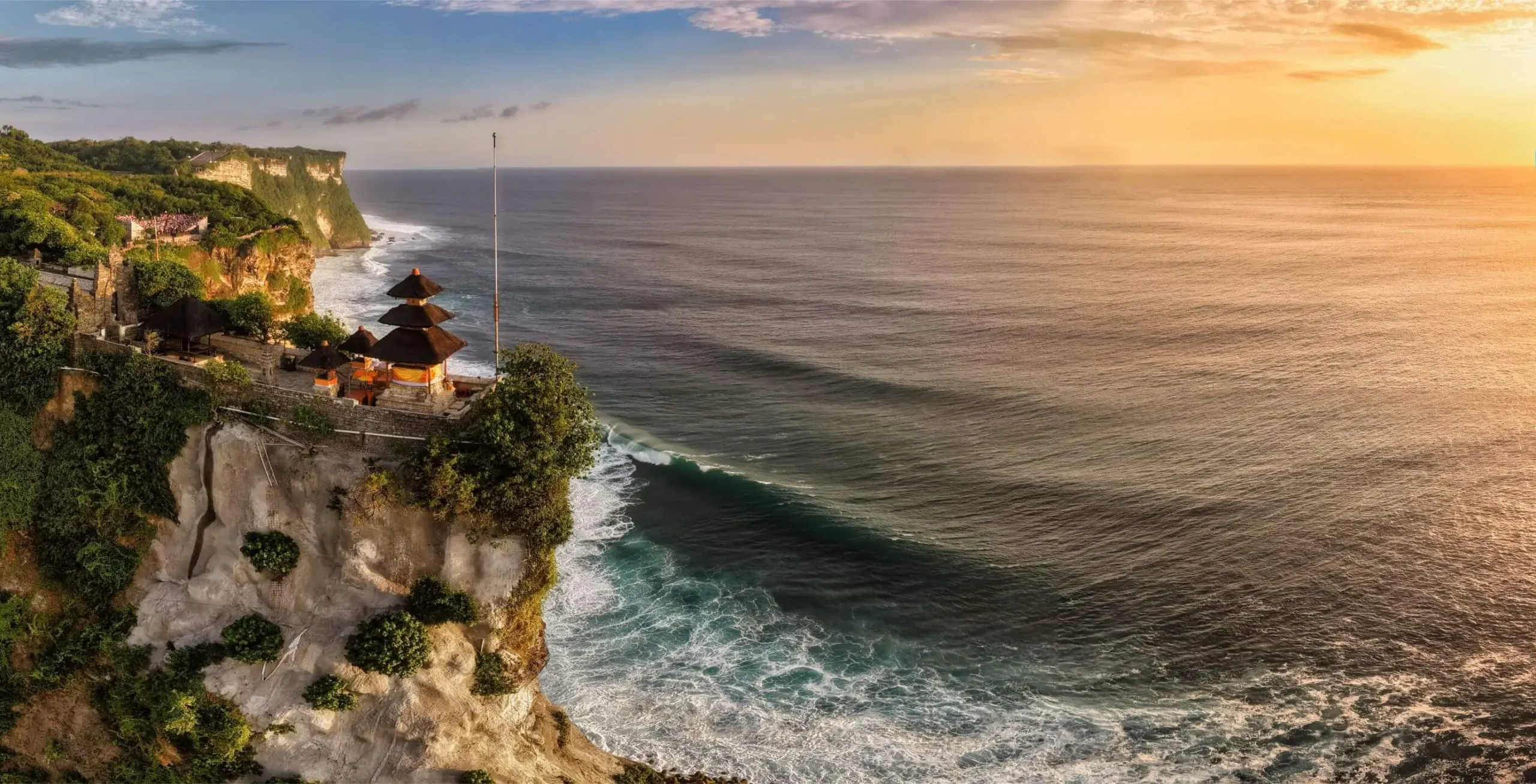
Pura Luhur Uluwatu is one of Bali’s six great directional temples (sad kahyangan), perched on a 70 metre cliff and dedicated as a sea temple guarding the island’s southwest. You don’t enter the inner temple. The pleasure is the clifftop path and the views over the surf below.
Hours and fees (current 2026): open daily 07:00 to 19:00. Following an official price change on 3 January 2026, foreign adults pay around IDR 60,000 and foreign children (4 to 12) around IDR 40,000; domestic visitors pay less. Parking is a few thousand rupiah (roughly IDR 4,000 for a car, IDR 2,000 for a motorbike). The ticket counter accepts cash and QRIS e-wallets (GoPay, OVO, DANA) but not international cards, so carry rupiah. A sarong and sash are provided free with entry and must be worn; shoulders and knees covered.
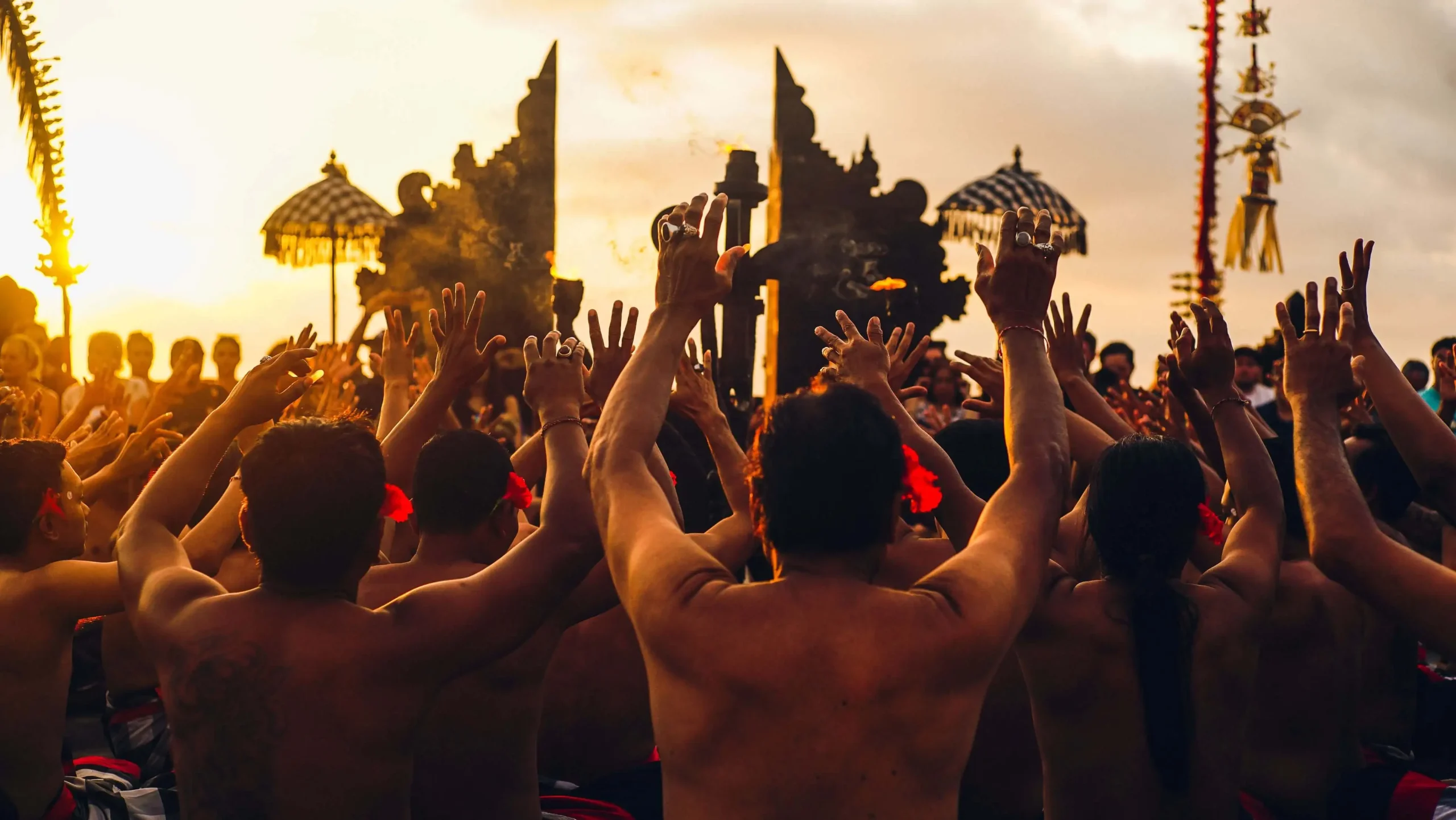
The Kecak fire dance is performed at the cliff edge amphitheatre at sunset, around a hundred bare chested men chanting cak cak cak in polyphonic rhythm around a fire, telling the Ramayana without a single instrument. It requires a separate ticket, sold at the venue box office at roughly IDR 150,000 (adult) and IDR 75,000 (child), with online options a little cheaper (around IDR 135,000). There are two sittings, at 18:00 and 19:00, each about an hour; the 18:00 show carries the sunset. Two community troupes perform on alternating days: Kecak Karang Boma (Monday, Wednesday, Friday, Saturday; box office roughly 16:30 to 20:00) and Sekaa Tari Kecak Uluwatu (Tuesday, Thursday, Sunday; roughly 17:00 to 20:00), so box office hours shift by day. Arrive well before showtime, 60 to 90 minutes in high season, as the amphitheatre fills and seating is unassigned. In the wet season (November to March) heavy rain can delay, relocate or cancel the outdoor show.
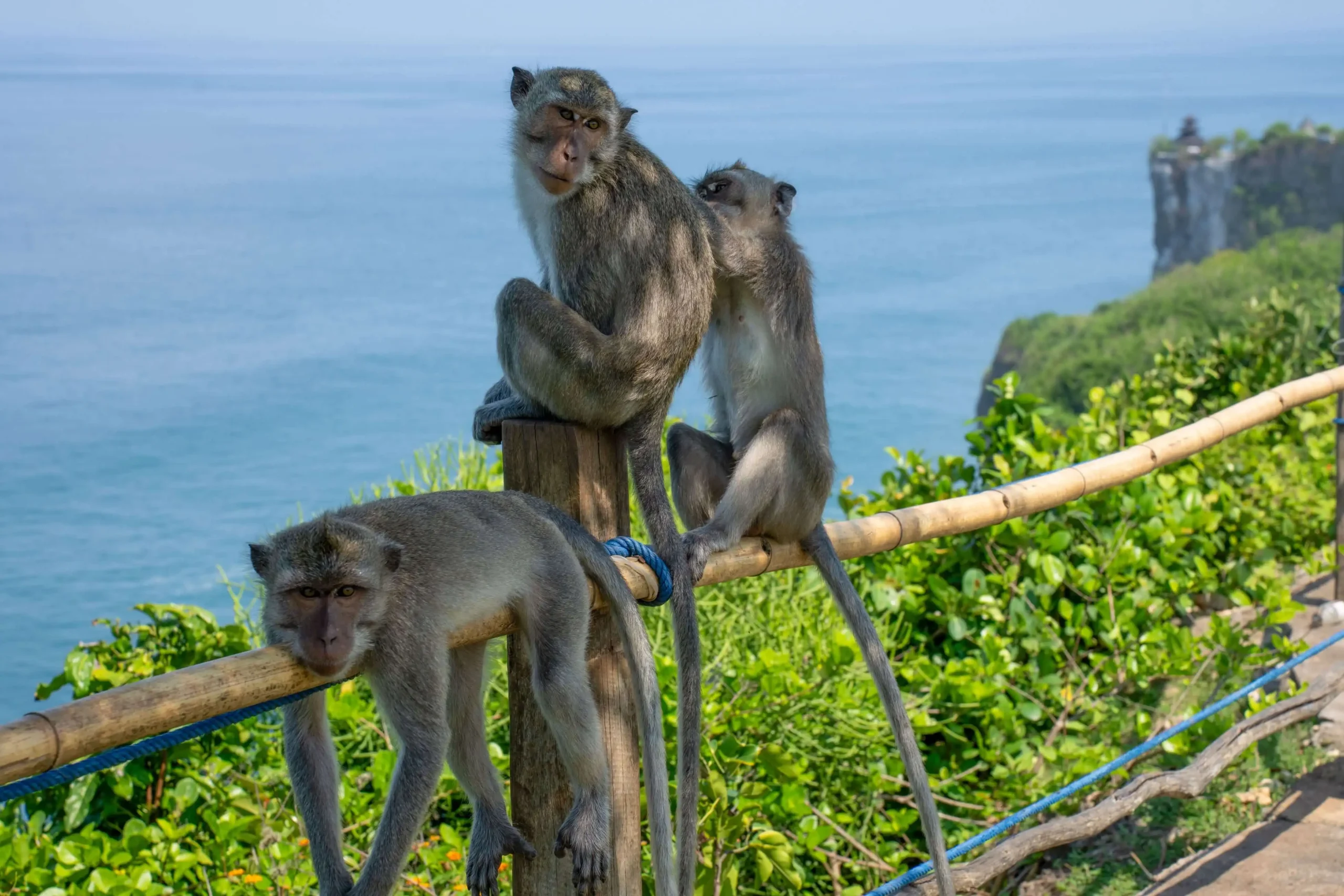
The monkeys are the other headline. The temple’s long tailed macaques are practised, deliberate thieves who target sunglasses, phones, hats and loose jewellery, often trading stolen items back for fruit via a handler. Before you enter, stow everything zipped away. Don’t wear sunglasses on your head, don’t dangle a phone, and don’t try to bargain with a monkey yourself. Find a temple handler.
Timing and traffic: arrive by 16:00 to 16:30 if you want the temple walk, the sunset and the dance in one visit. The single road in and out gridlocks after the show; leaving right at the end means a long crawl back toward Kuta and the airport, so either linger or leave promptly.
Sunsets and viewpoints
The entire western edge of the Bukit faces the sunset, which is why the clifftop is lined with places to watch it. The temple clifftop is the classic. The cliffs above Suluban and Blue Point, where our own terrace sits, give you the surfers below and the sun dropping into the Indian Ocean at once. Dreamland, Balangan and Melasti are all west facing and superb at golden hour. For a quieter, wilder version, the cliffs above Nyang Nyang and the far south around Karma and Gunung Payung trade crowds for space. Tegal Wangi, further toward Jimbaran, is a locals’ sunset and tide pool spot.
Beyond the beach
Garuda Wisnu Kencana (GWK)
Garuda Wisnu Kencana Cultural Park in Ungasan is built around the 121 metre statue of Vishnu astride the mythical bird Garuda: a 75 metre figure on a 46 metre pedestal with a 64 metre wingspan, designed by sculptor Nyoman Nuarta and inaugurated on 22 September 2018 by President Joko Widodo after 28 years in the making. It is among the tallest statues in the world. The 60 hectare park has landscaped plazas, daily Balinese performances (including a Kecak) and panoramic views; general admission runs around IDR 150,000, with a paid upgrade to go up inside the statue. Budget a couple of hours and expect a lot of walking and sun.
Yoga and wellness
Yoga and wellness are woven through the Bukit, concentrated around Bingin and Pecatu — daily drop-in classes, ice baths and saunas, sound healing, and several Yoga Alliance–registered teacher-training schools.
Drop-in classes are inexpensive and widely available; no need to book far ahead for a single session. A practical tip: download ClassPass before you arrive — many of the Bukit’s yoga shalas, Pilates studios, gyms and even spas between Pecatu, Bingin and Ungasan are on the app, so you can browse schedules, read reviews and book single sessions at discounted rates without messaging each studio on WhatsApp.
Cliff jumping
Be careful with the hype. The temple and main Uluwatu cliffs are 70 metres of sheer rock over reef; never jump there, it’s potentially fatal. Some lower, informal jumps exist around Blue Point at the right tide, but conditions change with the swell and there are no lifeguards. The genuinely organised, supervised jumps with platforms and ladders are over on the Nusa islands, not the Bukit. If in doubt, watch.
Snorkelling
Snorkelling on the Bukit is opportunistic rather than world class. Calm, low tide days at Blue Point, Pandawa, Gunung Payung and Green Bowl can reveal reef and rock pools. Bring your own gear. For serious snorkelling, the calm east coast and the Nusa islands are the real draw.
Paragliding
Paragliding launches from the cliffs at Timbis, near Gunung Payung on the south coast, when the wind is right. Tandem flights are available for those with no experience.
Practical tips
Getting around
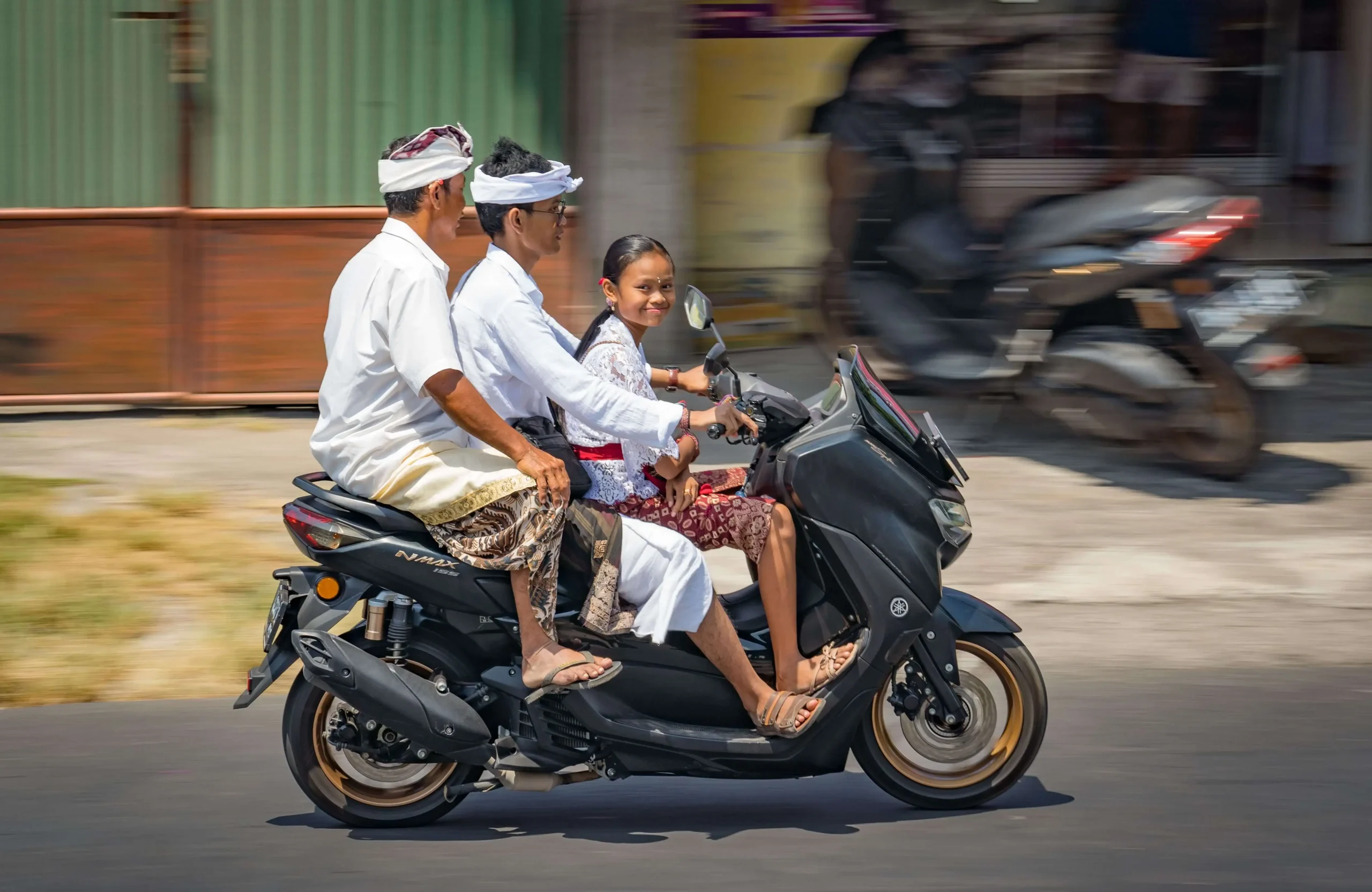
The Bukit is spread out, hilly and short on footpaths. Everything is farther apart than the map suggests. Grab and Gojek do work here, and they’re cheap, but there’s a catch: at many beaches, beach clubs and the temple, local transport syndicates block app pickups. You can usually get dropped off, but for the return you may have to walk 5 to 10 minutes to a main road to be collected, and availability thins late at night and right at sunset when demand spikes. For a day of beach hopping, a private driver (roughly IDR 500,000 to 1,000,000 for the day) is the least stressful option and waits for you. Scooters are the local currency of freedom, typically around IDR 70,000 to 150,000 per day to rent, but the Bukit’s steep, narrow, sometimes gravelly roads are not the place to learn, and you legally need an International Driving Permit plus a helmet. Without them your insurance is void, and accidents here are common.
When to come
The dry season, roughly April/May to October, brings sunny days, lower humidity, cleaner water and the best surf. July and August are peak: best waves, biggest crowds, highest prices. The shoulder months (May to June and September to October) are the sweet spot, dry season weather with fewer people and better value. The wet season (November to March) means short, heavy afternoon downpours, greener everything, lower prices, and the occasional cancelled Kecak. The Bukit is naturally drier than the rest of Bali year round.
Cash, ATMs and payments
Carry rupiah in small notes. Beach entrance fees, parking, warungs, shuttles and many small vendors are cash only, and some beaches (Nyang Nyang, Gunung Payung) have no ATM nearby. The temple and larger venues increasingly take QRIS e-wallets, but never rely on international cards at small booths.
What to bring to the beach
Cash for entrance and parking; water shoes or sturdy sandals for reef, rocks and long stairs; plenty of water (many beaches have little shade); reef safe sunscreen and a hat; and a small dry bag. Rent an umbrella or lounger where available. The equatorial sun is fierce even when a sea breeze makes it feel mild.
Tides and safety
Tides govern everything here, whether Suluban is passable, how much sand Bingin or Green Bowl has, whether a reef is a swimming pool or a hazard. Check a tide app before you set out. Currents on the exposed beaches (Nyang Nyang, Green Bowl, Suluban) are strong; swim only where it’s clearly safe, and watch the shore break at Dreamland.
Temple and cultural etiquette
Cover shoulders and knees at temples and wear the provided sarong. Don’t stand in front of people praying, don’t climb on shrines, and step around the little daily offerings (canang sari) laid on the ground. Menstruating women are traditionally asked not to enter temple grounds. Dress and behave modestly at ceremonies, and always ask before photographing people at prayer.
Drones
Bali tightened its drone rules sharply in January 2025. Drones must now be pre-registered through Indonesia’s official system regardless of weight; the under 250g exemption used in other countries does not apply here, under DGCA directive 008/2025. A 5 kilometre no fly exclusion applies around temples and sacred sites (under Bali Regional Regulation Perda Bali No. 12/2024), and a 15 kilometre buffer around Ngurah Rai airport covers much of the developed south. Maximum penalties are severe, up to IDR 5 billion (around USD 308,000) and up to five years’ imprisonment for restricted airspace violations, and enforcement (including by traditional village security) has become active, with confiscations and fines reported. Fly respectfully, never over temples, ceremonies or crowds, and never over the temple cliffs.
Distances: how the peninsula fits together
The Bukit is compact on paper but slow to cross, thanks to narrow roads and sunset traffic. As rough guides: the cluster of Uluwatu Temple, Suluban/Blue Point, Padang Padang, Bingin and Balangan sits at the western tip, mostly within 10 to 20 minutes of each other. Dreamland is a short hop north of that cluster. Melasti, Pandawa, Green Bowl and Gunung Payung line the southern coast, roughly 20 to 35 minutes east. GWK sits inland in Ungasan, central to everything. Nusa Dua and the airport are 30 to 45 minutes northeast. A sensible day pairs two or three neighbouring spots rather than criss-crossing the peninsula, and always leaves margin for the post-sunset crawl back off the Bukit.
Where we fit in
If your day on the Bukit brings you past Suluban, our terrace is right there on the cliff above the beach. It’s a good spot to end a day of beach hopping with an aperitivo and the sunset, or to sit down for a proper dinner with a view once the crowds thin out. And if all that walking down stairs and back up has you hungry sooner, our pizza is on the menu all day.